Mission
What we seek to do
Accelerate the supply of affordable living spaces with a minimum use of natural resources.
Progress
We work to improve these current numbers
CO2
Rents
15%
4,6 kg
below market average
CO2 / m2 / year
Satisfaction
7,6/10
overall satisfaction
-
In 2023, a CO2 law (finally) passed in Denmark limiting new buildings to emit less than 12 kg co2 / m2 year. Our existing designs are 60% below the 2023 requirement. If measuring not per m2 but per person our residents live with 80% less carbon emission from their homes. To get closer to zero emissions, we are working on Generation 5 and Earth Robots.
-
We compare our rents to the market prices of rooms in the areas we operate in. Our goal is too be 15% below market prices. The 2025 rental data puts median markets prices at 6.000 kr. (based on 1.311 observations). Our price in 2025 has been 5.583 kr. or 5.083 kr. including utilities and subsidies. To improve, we are working on the Flexible Housing Model that will secure a future value of our units, thereby streching the investment horisont and help us reduce rents.
-
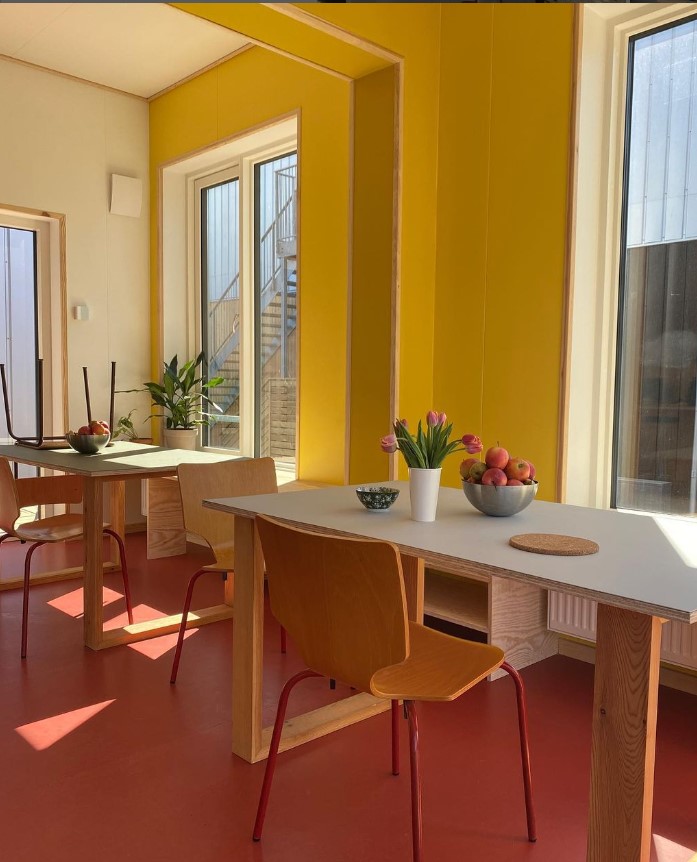
Using surveys and statistical analysis we are seeking to understand in detail what makes a place nice to live in. We currently score an average of 7,6/10 in overall satisfaction. To improve this score we are mainly focusing on improving shared spaces.
Journey so far
-
![]()
2014
It all begins with an idea 💡
CPH Village was founded on a loft in Refshaleøen, Copenhagen. Our vision was to build a business that solved societal problems. The idea was to activate idle land in cities with flexible buildings, adding affordable and ressource light housing, while creating value for society and our business.
-
![]()
2015
Prototype #01 🏕️
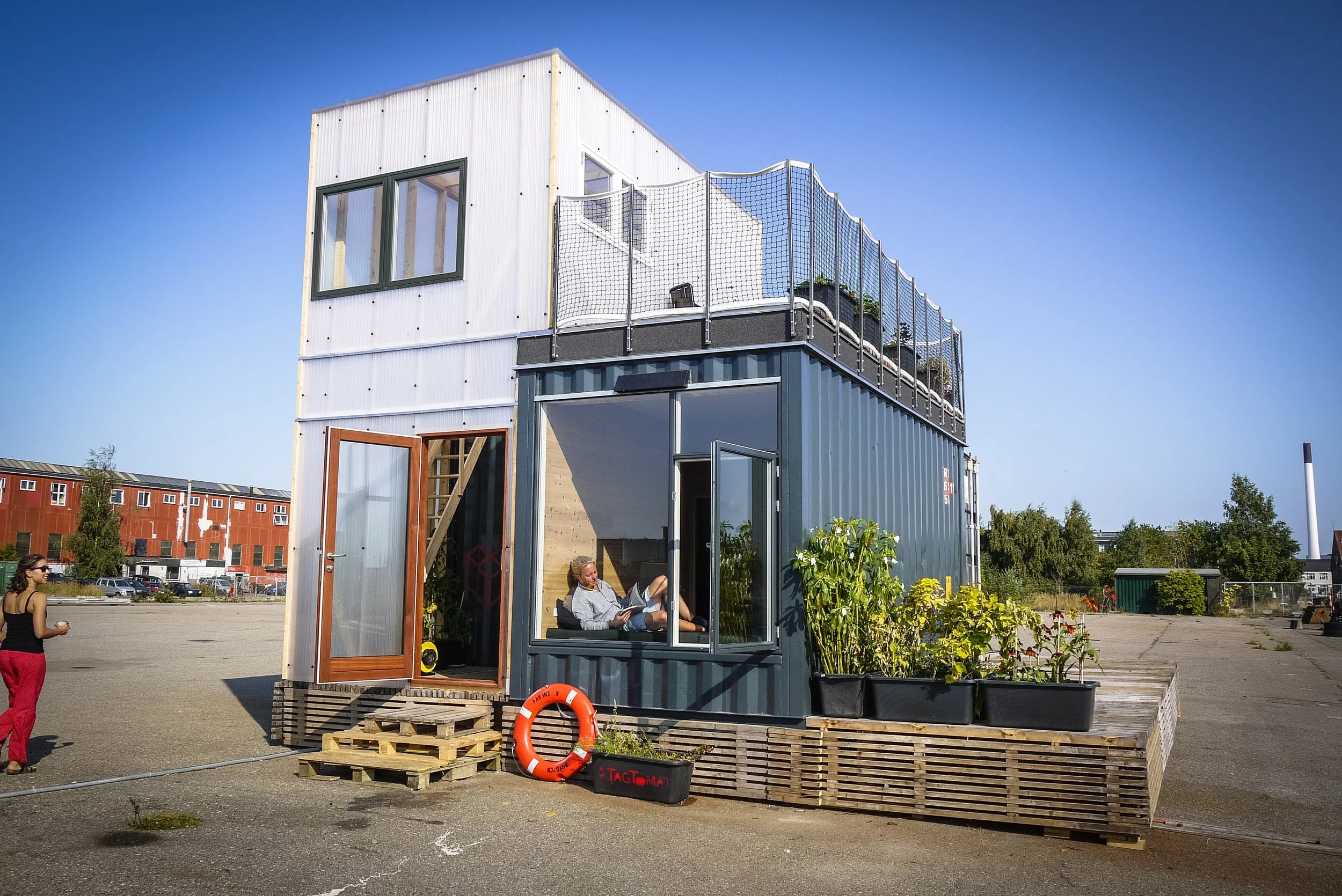
Show it, don't tell it. Our method to achieve our goals was to apply a start up iterative mindset, failing, learning, improving etc. Our prototype #01 was a small beacon of sustainable construction built from upcycled and organic materials. The prototype helped shape the public understanding, showing flexible buildings could be of high quality.
-
![]()
2016
Changing the law 👩🎓
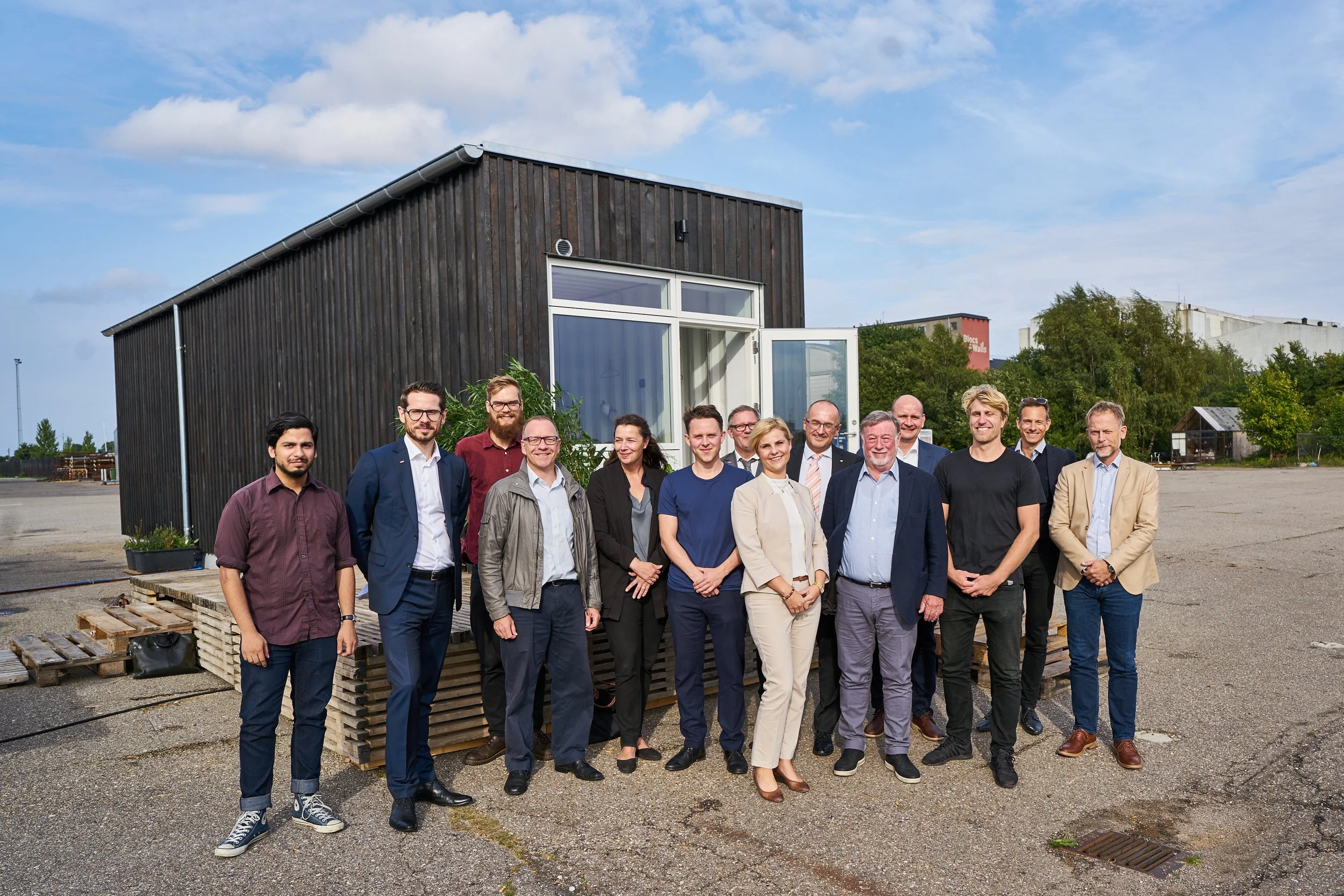
Our business model was… not legal… so we created an alliance of heavy hitting stakeholders and organizations who all had an interest in increasing the supply of more affordable and ressource light housing. With their help we changed the Danish zoning law making it possible to create student homes everywhere in cities. With the legal framework in place, we could bring our business idea to market. Let’s go!
-
![]()
2018
First village complete 🏊♂️
The first Village for 164 students was built in upcycled shipping containers seafront on Refshaleøen, Copenhagen. We unfolded our live simply concept - living community based in compact private rooms with attractive shared spaces. The Village won building of the year in the Municipality of Copenhagen in 2019.
-
![]()
2020
Second village completed 🌲
At the time of completion this was the largest wooden residential project completed in Copenhagen. Using a science based method we designed the village with increased biodiversity in mind. We now monitor progress making sure flora and fauna will be richer after we established the village than before.
-
![]()
2022
Outsider no more? 🤷🏽
In 2022 we won the prestigious “Bygherreprisen”; The award was given to us because of our data-driven and iterative approach to construction and real estate with a stringent focus on absolute sustainability. It was a special moment for us as it was handed to us from industry leaders and symbolized that we had moved from being total outsiders to frontrunners in the sector.
-
![]()
2022
Third Village completed ❤️
In our first downtown project, 88 villagers are living in Amagerbro a stone's throw from the University of Copenhagen. This project was in three stories and also the first time we divided the functions of our community spaces into separate rooms. The project has lately transformed with a new greenhouse based on input from villagers. In Village #3 we launched our neighbor co-design method “Open Call”, trying to create a village with maximum value for neighbors and future residents.
-
![]()
2023
Fourth Village completed 😎
This was the first time we built a massive project. 350 students living in the trendy neighborhood of Nørrebro, Copenhagen. The project is the biggest housing project in Denmark using screw foundations. In Nørrebro we also made an Open Call and included the neighbors before construction. We learned that the kids in the area are missing soccer fields, therefore we have designed our parking area with the dual purpose of a soccer field and parking lot.
-
![]()
2023
The Biowall invented 🔥
Since our first prototype #01 we worked toward implementing a full biowall without mineral wool insulation and plastic vapor barriers. In 2023 we passed the EU firetest and can now build with this solution.
-
![]()
2025
Village Østerbro completed. This design is denser, has a lower a CO2 footprint of 5 kg co2 / m2 / year and is made more future proof with a design that can go from 20m2 student housing to 80 m2 all purpose housing.



Next level
These are the major innovations we are creating to move forward…
Village
Generation 5
Flexible Housing
Model


2025
2026
Village
Generator
Earth
Robots
2026
2027


Village Generation 5

Solar
Roof

Bio
wall
2025

Flexible
floor plan
Less carbon Village Generation 5 has reduced carbon footprint by ~30% compared to our generation 4 design going from 7kg co2/m2/year to 4,6kg co2/m2/year. This is achieved by lesser use of materials, biobased walls and a full solar roof.
Full Floor Plan Flexibility allow an entire floor to be remodeled from 8 to 1 room giving the flexibility to use the building for anything ranging from small space living to larger housing units or even open office space

EFFEKT Arkitekter

Born by fire. A key barrier to building with wood is fire safety. In creating Village Generation 5 we are going trough a rigours testing process to ensure that our design holds up in case of fire. It is a bit similar to the crash tests required by new car designs.


Flexible housing model

6 floors
max
2026

90% value recycle
The Flexible Housing Model is a business model for the transformation of our villages into permanant affordable housing units.
We are developing this business model together with publich housing assoications. The goal is that we can take all the ongoing feedback of residents living currently living in the basic units and then use that to upgrade and convert housing into public housing.

Flexibility to reshape both existing and future villages functionally and aesthecitally. The goal is to allow the transformation of a 2-3 floor village into a 6 floor village.
When reshaping a village we want to recycle as much as possible. The goal is to be able to recycle 90% of the materials and the time invested into the existing village in the transformation process.
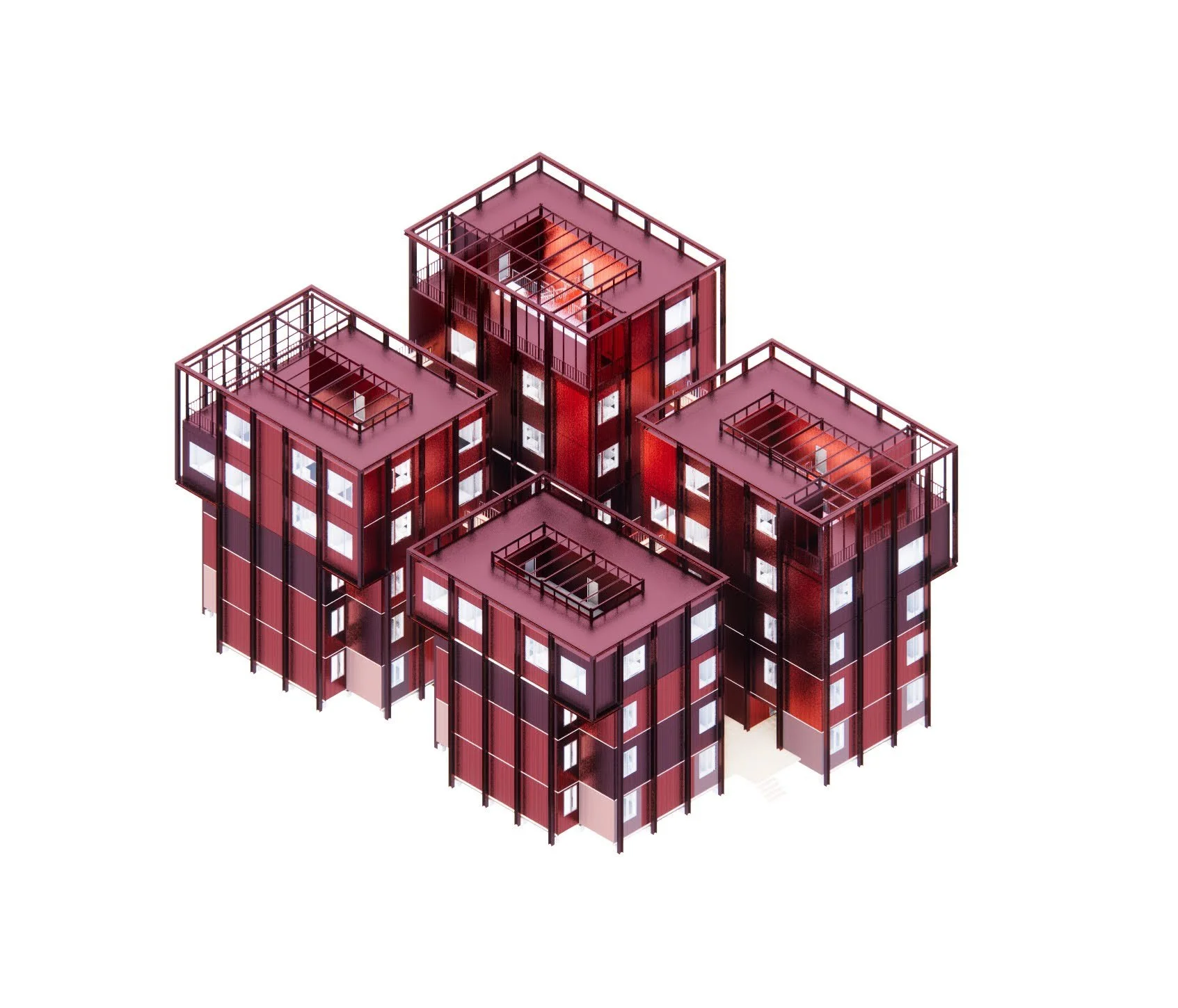


Organic site development is enabled by this model by the ability to move buildings. Cities and landowners can use this to better respond to changing needs over time. It also allow for a radically new way of engaging citizens that can take part of the evaluation and redesign neighbourhoods based on actual experiences.
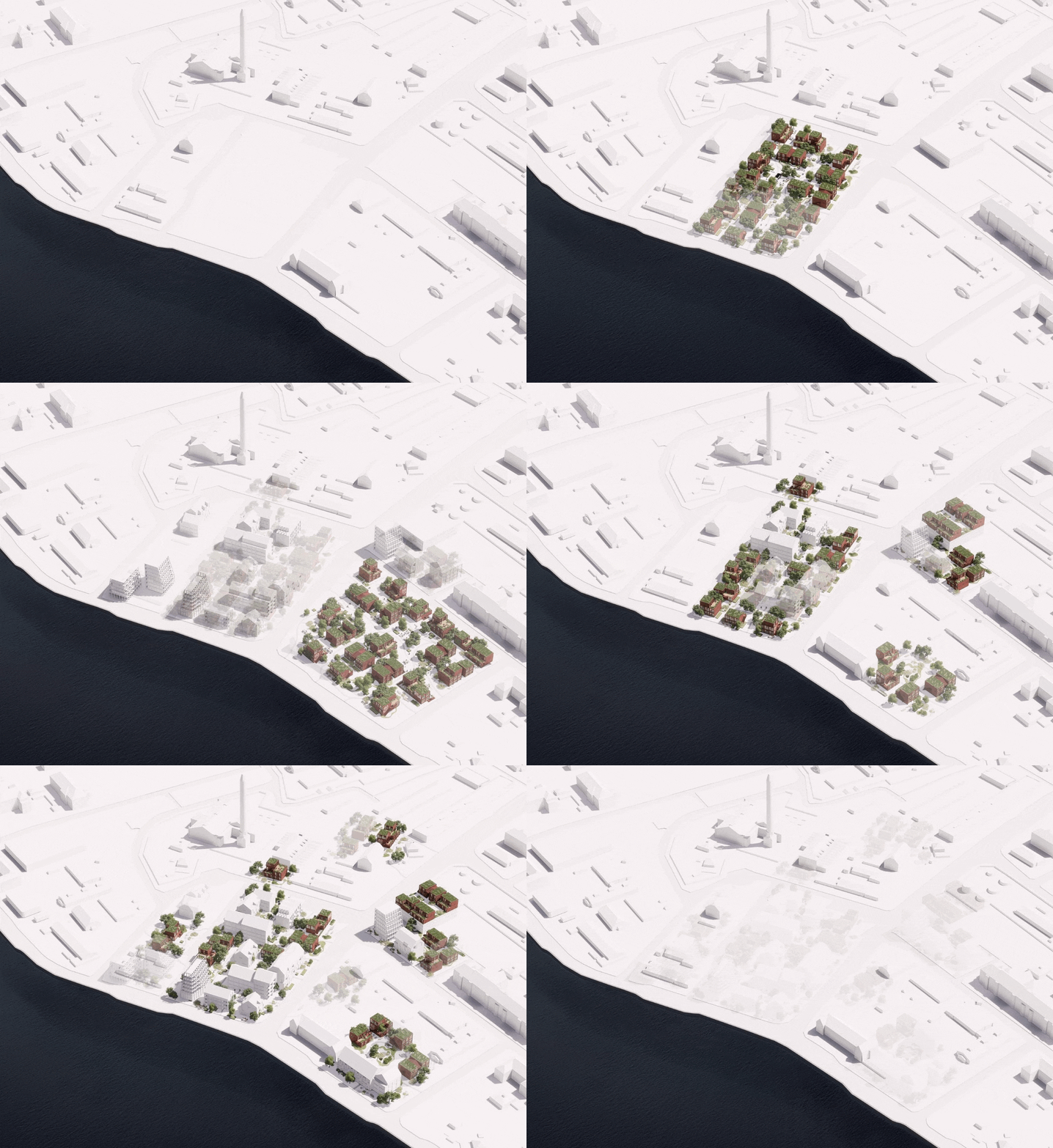
EFFEKT Arkitekter

Village Generator
2026
Village Generator is a building technology that allow for a faster design, approval, production and assembly flow for residential projects.
We are building this because - like everyone else - we hate how design, tendering, permitting, ordering, manufacturing and assembly is working today; slow and full of mistakes and frustrations.
We are making an integrated value chain so that we can half the time it takes to go from idea to move in.

Made for villagers, built by villagers is a goal. Essentially, to make construction so easy that people can take part in creating their own homes even with no prior experience.


Earth Robots
2027
More info coming soon
A local, low carbon supply chain A key barrier to the supply of affordable housing is the limited supply of materials and labour. We are steadily running out of basic materials and the demographic trend is fewer hands to do the work in the future.
A combination of earth and robots might help solve this bottleneck.
Together with the robotics industry, we are working on setting up a new supply chain for processing broadly available and cheap materials such as earth.